by Rain Chu 7 月 28, 2026 | Agent , AI
CrewAI 不是一個大語言模型,而是一套用來編排 AI Agent 的 Python 框架,它把一個複雜任務拆成不同角色,再透過 Task、Process 與 Crew 控制合作方式。模型負責思考,工具負責行動,知識庫負責補充事實,而 CrewAI 負責讓這些元件按照可理解的流程運作。
提示詞優化是一個很適合理解 CrewAI 的案例,只要把工作拆成分析、改寫、測試與最終審核,就能看見多 Agent 的價值,也能看見它的代價,Agent 數量增加後,模型呼叫、檢索次數、延遲與費用都會一起增加。真正重要的不是組一支看起來很熱鬧的 AI 團隊,而是讓每個角色都有不可取代的責任。
CrewAI 是什麼
CrewAI 是獨立開發的多 Agent 自動化框架,不依賴 LangChain,官方把主要能力分成 Crews 與 Flows,Crews 適合需要角色分工、探索與協作的任務,Flows 適合需要明確順序、狀態、條件分支與可稽核結果的工作流。
可以把它想成一間小型公司,Crew 是團隊,Agent 是成員,Task 是工作單,Process 是工作順序,Tool 是成員可以使用的工具。Knowledge 則是團隊共同或個別可查閱的資料庫。
元件 負責內容 提示詞優化案例 Agent 角色、目標、模型、工具與行為 分析師、改寫者、測試者 Task 工作描述、輸入、預期輸出與驗收條件 找出缺漏、產生新版、比較品質 Crew 組合 Agent 與 Task 並啟動執行 完整的提示詞優化團隊 Process 決定工作如何安排 依序分析、改寫、測試與定稿 Flow 控制狀態、事件與條件路徑 品質不合格時退回重寫 Knowledge 提供文件、網站或結構化資料 提示詞規範與優秀案例 Tool 讓 Agent 存取外部能力 向量檢索、網頁搜尋與評分器
提示詞優化 Crew 的完整架構
使用者輸入原始需求
        ↓
RAG 檢索提示詞規範與案例
        ↓
Prompt Analyzer 找出目標、限制與缺漏
        ↓
Prompt Optimizer 建立第一版完整提示詞
        ↓
Prompt Tester 以驗收標準比較品質
        ↓
Ultimate Optimizer 整合修正並輸出定稿
這種設計的關鍵是讓每個 Agent 產生下一個 Task 能直接使用的結果,分析師不應只給模糊評論,而要輸出結構化問題清單,改寫者要根據問題清單產生完整版本,測試者要使用固定量表,而不是憑感覺說新版比較好,最後的審核者只整合已確認的修正,不再任意改變需求。
若要進一步降低漂移,可以用 Pydantic 或 JSON 結構固定每一階段的輸出。這比單純增加角色背景故事更有效,因為下一個步驟能明確知道要讀取哪些欄位。
四個 Agent 不一定比兩個好
分析、優化、測試與最終優化看起來很完整,但每個角色都使用大型模型,還在每一階段重複查詢向量資料庫時,成本很容易放大。對簡單提示詞而言,分析與改寫可以由同一個 Agent 完成,再保留一個獨立測試 Agent,就已經有清楚的製作與驗收分工。
保留不同 Agent,當兩個角色需要不同工具、不同權限或不同模型時。
合併 Agent,當工作只是同一段文字的連續改寫時。
改用一般函式,當步驟不需要推理,只是格式轉換或資料驗證時。
改用 Flow,當流程需要條件分支、重試、人工確認與狀態保存時。
RAG 在 CrewAI 裡負責什麼
RAG 的用途不是替 Agent 增加想像力,而是讓它在執行任務前找到可靠的參考資料,提示詞優化系統可以把提示詞指南、優秀範例、品牌規範與輸出格式放進知識庫。使用者送出需求後,系統只取回最相關的片段,再讓 Agent 根據這些內容工作。
2024 年的實作組合是 Phidata、pgvector 與 OpenAI Embedding,Phidata 現在已改名為 Agno ,如果要維護舊專案,應先確認套件名稱與匯入路徑,不宜直接照搬舊版命令。
目前 CrewAI 已有內建 Knowledge ,可讀取文字、PDF、CSV、Excel、JSON 與網站內容,官方的 provider-neutral RAG client 預設使用 ChromaDB,也支援 Qdrant,若既有系統已使用 PostgreSQL,仍可把 pgvector 封裝成自訂 Tool,若只是做第一個原型,先用內建 Knowledge 通常更省事。
想理解本地檢索的完整取捨,可以搭配 GraphRAG 使用本地 Ollama ,若知識來源主要是專案文件與程式碼,OpenWiki 建立 Agent 共用知識庫 也很適合一起比較。
先用 RAG,不要急著訓練模型
手上有大量人工撰寫的中英文檢索式或高品質提示詞時,第一步不一定是微調。先把資料清理成「需求、上下文、限制、輸入範例、理想輸出」的成對資料,再用 RAG 找相似案例,通常能更快驗證需求。
先建立測試集,保留一批資料完全不進知識庫。
用 RAG 加單一 Agent 建立基準結果。
加入獨立評分 Agent,比較正確性、完整性與格式。
只有在格式高度穩定、資料量充足且 RAG 已到瓶頸時,再評估微調。
這樣做的好處是資料更新不必重新訓練,錯誤案例也能快速撤換。若資料彼此關聯複雜,還可以參考 Graphify 知識圖譜 ,評估是否需要從純向量檢索進一步加入實體與關係。
CrewAI 2026 最新安裝方式
截至 2026 年 7 月,官方文件要求 Python 3.10 以上且低於 3.14,並建議使用 uv 管理套件。CrewAI 現在預設建立 JSON-first 專案,Agent 放在 agents/*.jsonc,Task 與 Crew 設定放在 crew.jsonc。若需要早期常見的 Python 與 YAML 結構,才使用 --classic。
uv tool install crewai
uv tool update-shell

crewai create crew prompt_optimizer
cd prompt_optimizer
crewai install
crewai run
建立後會看到 crew.jsonc、agents/、knowledge/、skills/ 與 tools/。這個結構已經把多數需求放進設定檔,適合先從角色與任務定義開始,再加入自訂 Python Tool。
需要舊版 Python 與 YAML 專案時
crewai create crew prompt_optimizer --classic 舊版教學常出現 crew.py、agents.yaml 與 tasks.yaml,這些概念仍然有效,但預設腳手架已經不同。遇到匯入錯誤時,先確認 CrewAI 版本,再對照該版本官方文件。
CrewAI 如何連接 Ollama
CrewAI 不限定 OpenAI 或 Anthropic。官方文件提供 Ollama 設定,只要在 Agent 指定 LLM 與 base_url 即可。這能把多數推理留在本地端,避免每個 Agent 都產生雲端 API 費用。
from crewai import Agent, LLM

local_llm = LLM(
    model="ollama/qwen3:8b",
    base_url="http://localhost:11434"
)

analyzer = Agent(
    role="提示詞分析師",
    goal="找出需求缺漏並建立清楚的改寫規格",
    backstory="你擅長把模糊需求拆成可驗收的條件",
    llm=local_llm
)
如果 Ollama 在另一台主機,把網址換成實際內網位置即可。部署前要確認 Ollama 有對區域網路監聽、防火牆已開放,而且 CrewAI 使用的模型名稱與 ollama list 完全一致。選擇模型時可以參考 本地大模型推理框架比較 。
Docker 與硬體需求怎麼看
Docker Desktop 不是 CrewAI 的必要條件。早期範例需要 Docker,是因為它用容器啟動 PostgreSQL 與 pgvector。Linux 伺服器可以直接使用 Docker Engine,也可以把 PostgreSQL 安裝成系統服務。若改用 CrewAI 內建 Knowledge 與本地 ChromaDB,第一版甚至不一定需要 Docker。
一般筆電可以執行 CrewAI,因為框架本身不重。真正決定硬體需求的是模型、Embedding、向量資料庫與同時執行的 Agent 數量。雲端模型加本地向量庫的門檻最低。本地模型則要依參數量、量化格式與上下文長度準備足夠的記憶體或顯示記憶體。
成本最高的地方不是框架
CrewAI 開源框架本身不是主要成本。費用通常來自每個 Agent 的模型呼叫、反覆 RAG 檢索、長上下文、Embedding 建庫與失敗重試。四個 Agent 各自檢索並呼叫一次大型模型,很可能比單一 Agent 加一次驗收多出數倍費用。
讓檢索結果在同一輪工作流中共用,不要每個 Agent 重複搜尋。
分類、格式檢查與簡單摘要改用小模型。
昂貴模型只負責最終改寫或高風險判斷。
為 Task 設定清楚的 expected output、guardrail 與最大重試次數。
保存每次輸入、檢索片段、輸出與評分,才能知道錢花在哪裡。
Crews 與 Flows 應該怎麼選
若任務需要研究、創作、分析與不同專業觀點,使用 Crew。若工作需要固定順序、條件分流、錯誤重試、人工核准與狀態恢復,使用 Flow。正式系統通常會把兩者結合,由 Flow 控制整體流程,只在需要推理的節點呼叫 Crew。
需求 建議方式 研究後寫成報告 Crew 分析、改寫與交叉審核 Crew 依分數決定重寫或通過 Flow 呼叫 API 並等待人工批准 Flow 完整內容生產管線 Flow 控制流程,Crew 處理創作
如果需要從桌面工作台管理 Agent 專案,也可以參考 OpenWork 與 OpenCode Agent 工作台 ,比較框架層與操作介面的差異。
我會怎麼重做這套提示詞優化系統
先用單一 Agent 加 Knowledge 建立基準版本。
定義固定評分表,檢查目標、背景、限制、格式與可驗收性。
加入一個獨立測試 Agent,只負責找問題與打分。
分數未達門檻時,由 Flow 送回改寫,並限制重試次數。
先用 Ollama 小模型跑分析與分類,必要時才把最終改寫交給較強模型。
用保留測試集比較原始提示詞與優化結果,不把自我評價當成唯一證據。
這個版本的 Agent 更少,但責任更清楚,也更容易測試。CrewAI 的價值不是替程式多包幾層,而是讓角色、任務、工具、知識與執行順序都能被明確描述。當每個步驟都能觀察、驗證與替換,多 Agent 才真正從展示走向可維護的系統。
官方資源與案例程式碼
FAQ
CrewAI 是模型還是框架
CrewAI 是多 Agent 編排框架。它負責組織 Agent、Task、Process、Tool、Knowledge 與 Flow,實際推理由 OpenAI、Anthropic、Ollama 或其他模型提供。
CrewAI 可以完全使用本地模型嗎
可以。Agent 的 LLM 可指向 Ollama,也能連接其他 OpenAI 相容端點。若 Embedding 與知識庫也改用本地方案,就能大幅降低雲端 API 成本。
Crew 和 Flow 有什麼差別
Crew 強調角色分工與自主協作。Flow 強調精確的執行路徑、狀態、條件分支與可恢復性。正式系統常用 Flow 管理整體流程,再把需要創作或分析的工作交給 Crew。
建立提示詞優化工具需要微調模型嗎
通常不需要先微調。先用 RAG 提供規範與案例,再建立獨立測試集評估品質。只有資料格式穩定、數量足夠,而且 RAG 已無法改善時,才值得評估微調。
使用 CrewAI 一定要安裝 Docker Desktop 嗎
不一定。Docker Desktop 只是啟動 pgvector 的方便方式。CrewAI 本身不依賴 Docker,Linux 可以使用 Docker Engine,也能改用本機 ChromaDB 或遠端向量資料庫。
by Rain Chu 7 月 20, 2026 | Agent , AI , API , Tool
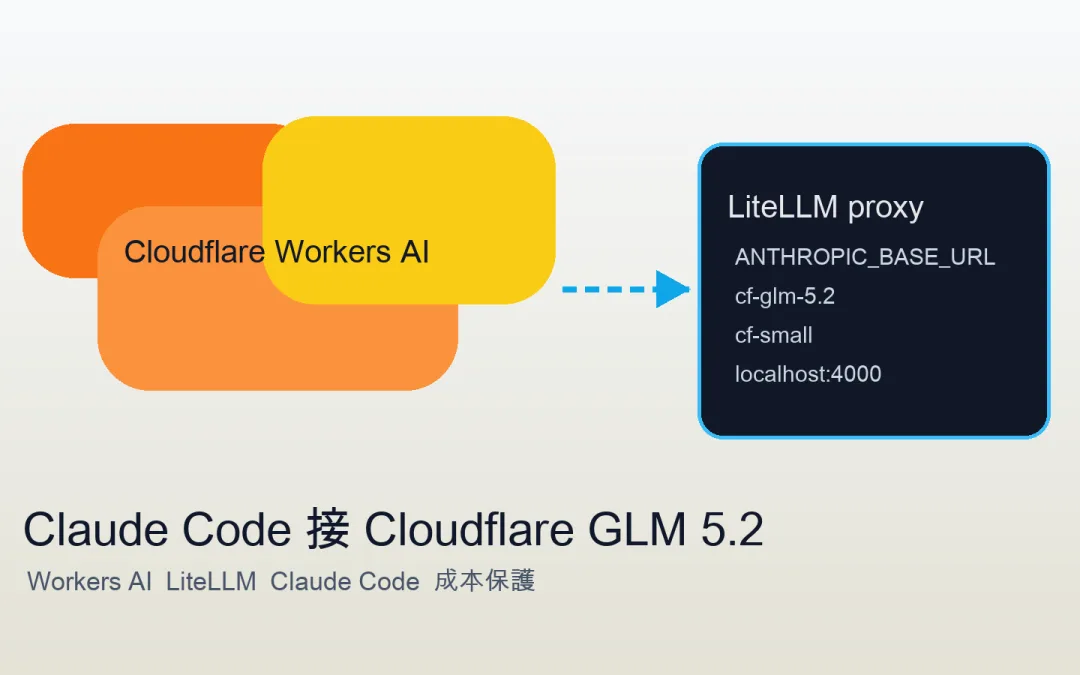
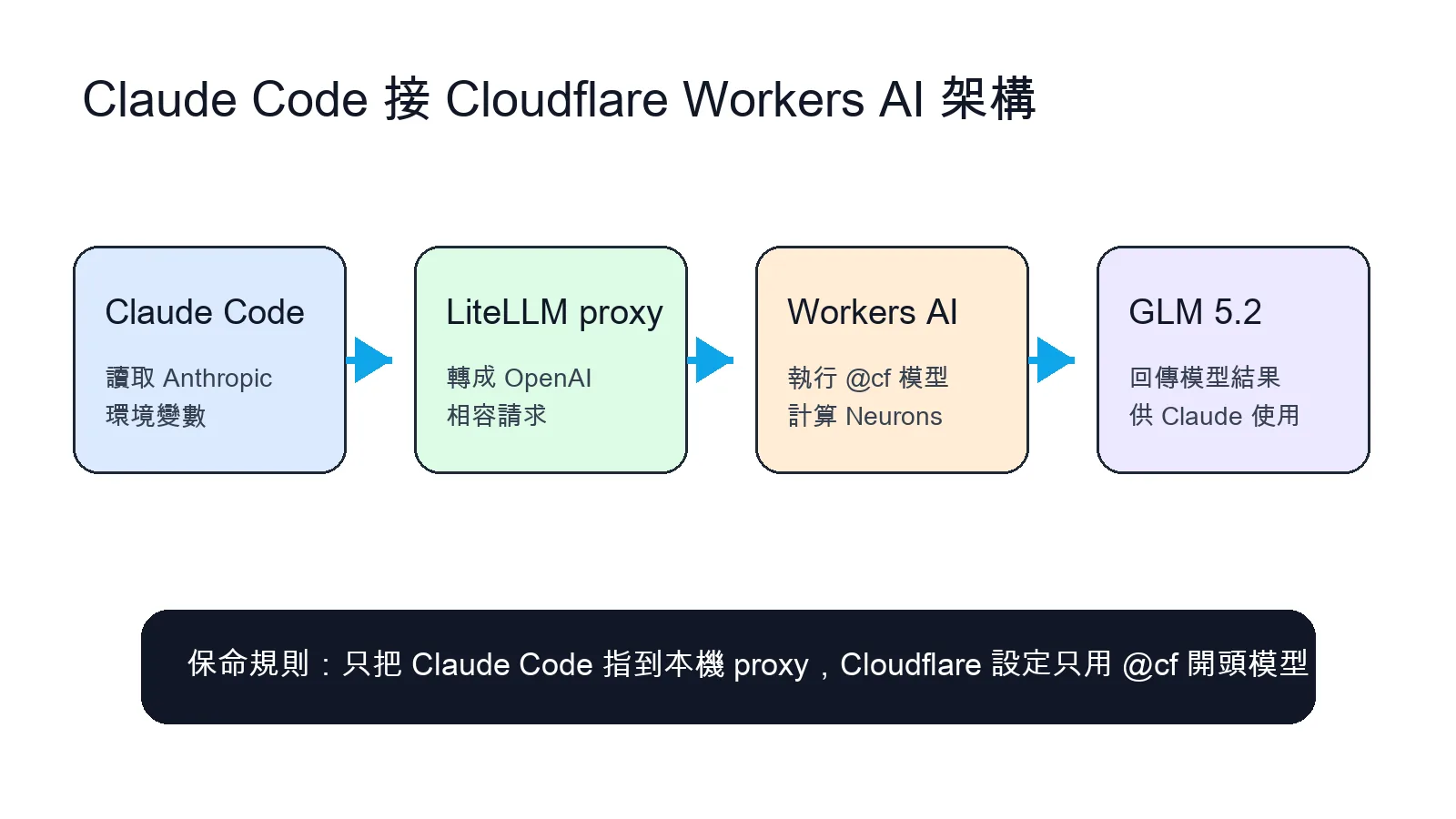
Cloudflare Workers AI 拿來接 Claude Code 的做法很簡單:Cloudflare 跑模型,LiteLLM 在本機當轉接橋,Claude Code 只需要改 Anthropic 相關環境變數,就能把請求送到本機 proxy。
這篇整理的是一個比較務實的路線。它不是要你把所有模型成本都消失,而是讓你知道免費額度在哪裡、帳單風險在哪裡、命令怎麼下、哪些設定一定要看清楚。
先講結論
Cloudflare Workers AI 有免費額度,官方價格頁寫明 Free plan 每天有 10,000 Neurons,GLM 5.2 目前也在 Cloudflare Workers AI 模型列表裡,可以透過 Cloudflare API 呼叫。這代表你可以把 Claude Code 的模型入口改成本機 LiteLLM proxy,再由 LiteLLM 轉送到 Cloudflare 的 @cf/zai-org/glm-5.2。
但「免費」不是「無限」,Cloudflare 的計費單位是 Neurons,免費額度用完後會受到方案限制,更重要的是,Cloudflare AI Gateway 也能接外部模型,如果你把 OpenAI 或 Anthropic 這類外部模型接進去,那就不再是 Cloudflare Workers AI 的免費模型邏輯,帳單會回到外部供應商那邊。
Claude Code 只改成本機 Anthropic 入口,真正的模型請求由 LiteLLM 轉到 Cloudflare Workers AI。 這個架構在解什麼問題
Claude Code 很好用,但長時間寫程式、重構、跑測試、修錯時,模型成本會變得很有感。若只是一些低風險任務,例如產生腳手架、改小工具、做簡單 demo、先跑一輪想法,Cloudflare Workers AI 的免費額度可以拿來當低成本緩衝層。
這和 用 Claude Code 搭配 LM Studio 與 Ollama 的思路很像,只是這次不是跑本地模型,而是把免費雲端額度接進本機開發流程。若你的工作流已經在用 Claude Code、Codex 和 skill 組合工作流 ,這種 proxy 入口會很有彈性。
完整操作命令
下面命令以 macOS 或 Linux 為主。你需要先有 Cloudflare 帳號,並在 Cloudflare dashboard 取得 Account ID 和 API Token。API Token 建議只給 Workers AI 需要的最小權限,不要用過度寬鬆的全域 token。
0. 安裝 Claude Code
npm install -g @anthropic-ai/claude-code 1. 用 curl 單測 GLM 5.2
先確認 Cloudflare 端可以呼叫模型。把 `你的ACCOUNT_ID` 和 `你的API_TOKEN` 換成自己的值。
curl https://api.cloudflare.com/client/v4/accounts/你的ACCOUNT_ID/ai/run/@cf/zai-org/glm-5.2 \
  -H "Authorization: Bearer 你的API_TOKEN" \
  -d '{"messages":[{"role":"user","content":"用一句話介紹你自己"}]}'
2. 安裝 uv
LiteLLM proxy 用 uvx 跑,可以固定 Python 3.12,避開較新 Python 版本造成的編譯問題。
curl -LsSf https://astral.sh/uv/install.sh | sh 3. 驗證 LiteLLM 能跑
uvx --python 3.12 --from 'litellm[proxy]' litellm --version 4. 建立 cf-config.yaml
建立 `cf-config.yaml`。`你的ACCOUNT_ID` 有兩處要換。`cf-glm-5.2` 給 Claude Code 主要模型用,`cf-small` 給較輕量任務用。
model_list:
  - model_name: cf-glm-5.2
    litellm_params:
      model: openai/@cf/zai-org/glm-5.2
      api_base: https://api.cloudflare.com/client/v4/accounts/你的ACCOUNT_ID/ai/v1
      api_key: os.environ/CLOUDFLARE_API_TOKEN
  - model_name: cf-small
    litellm_params:
      model: openai/@cf/meta/llama-3.1-8b-instruct-fp8
      api_base: https://api.cloudflare.com/client/v4/accounts/你的ACCOUNT_ID/ai/v1
      api_key: os.environ/CLOUDFLARE_API_TOKEN

litellm_settings:
  use_chat_completions_url_for_anthropic_messages: true
5. 啟動 LiteLLM 翻譯橋
這個終端視窗要保持開啟。Claude Code 之後會連到 `localhost:4000`。
export CLOUDFLARE_API_TOKEN=你的token
uvx --python 3.12 --from 'litellm[proxy]' litellm --config cf-config.yaml --port 4000
6. 新開視窗測 proxy
curl http://localhost:4000/v1/models -H 'Authorization: Bearer sk-1234' 7. 把 Claude Code 指到本機 proxy
export ANTHROPIC_BASE_URL=http://localhost:4000
export ANTHROPIC_AUTH_TOKEN=sk-1234
export ANTHROPIC_MODEL=cf-glm-5.2
export ANTHROPIC_DEFAULT_HAIKU_MODEL=cf-small
接著啟動 Claude Code,若跳出自訂 API 設定就選是。進入後用 `/status` 確認 Base URL 指向 `localhost:4000`。
8. 把設定寫進 shell profile
如果你確定要長期使用,可以把上面四行 `ANTHROPIC_` export 加到 `~/.zshrc` 或 `~/.bashrc`。我會建議先手動跑幾次確認沒有問題,再寫進 profile。
Windows PowerShell 寫法
PowerShell 不用 `export`,改用 `$env:`。
$env:ANTHROPIC_BASE_URL="http://localhost:4000"
$env:ANTHROPIC_AUTH_TOKEN="sk-1234"
$env:ANTHROPIC_MODEL="cf-glm-5.2"
$env:ANTHROPIC_DEFAULT_HAIKU_MODEL="cf-small"
若要永久保存,放進 PowerShell 的 `$PROFILE`。Windows 跑 AI Agent 時,環境隔離也很重要,可以延伸看 Windows 跑 AI Agent 為什麼要用 WSL 。
保命提醒:不要把外部模型當免費額度
最容易出事的地方,是把 Cloudflare Workers AI、Cloudflare AI Gateway、OpenAI、Anthropic 混在一起。這篇的低成本前提,是 Cloudflare config 裡的模型走 `@cf/` 開頭,例如 `@cf/zai-org/glm-5.2`。這類模型用的是 Cloudflare Workers AI 額度。
如果你把 Gateway 接到 GPT 或 Claude,那些請求可能會回到 OpenAI 或 Anthropic 的帳單。Cloudflare 只是通道,不代表外部模型突然免費。真正要保命,就是把模型名稱、api_base、API key 來源逐一檢查,並在 Cloudflare 後台看用量。
官方價格頁目前寫得很明確:Free plan 每天 10,000 Neurons,Paid plan 也有每天 10,000 Neurons 免費額度,超出後依 Neurons 計費。免費方案超出額度通常是操作失敗,不是自動無限跑。這點比「無限免費」四個字重要太多。
省額度的三個做法
第一,任務分層。小任務用 `cf-small`,複雜推理再用 `cf-glm-5.2`。第二,讓 Agent 先輸出計畫再執行,避免一次丟太長上下文。第三,把重複流程寫成腳本或 skill,減少模型反覆讀同一批資料。
這也是我一直看好的方向:不要只追求模型本身,而是把模型接到穩定工具鏈。像 Playwright CLI 讓 Codex 操作瀏覽器 ,或 讓 Agent 自己搜尋和使用 skills ,本質上都是把昂貴推理留給真正需要判斷的地方。
我會怎麼用
我不會把這套當成主力模型的完全替代品,而是當成低成本實驗層。適合拿來跑 demo、試 prompt、生成小工具、做簡單 code review、補文件、處理一次性腳本。真正重要的架構決策、複雜除錯、長上下文專案,還是要保留更強模型或本地大模型選項。
如果你已經在用 Codex 和 ChatGPT Work 這類 AI 代理工作流 ,這套 Cloudflare Workers AI + LiteLLM 的做法可以當成另一個模型入口。它的價值不是讓你省到零,而是讓你有更多成本可控的實驗空間。
延伸資源
FAQ
Cloudflare Workers AI 接 Claude Code 真的免費嗎?
不是無限免費。Cloudflare Workers AI 有每日免費 Neurons 額度,超出後會依方案限制或計費。要把它當成低成本額度,不要當成沒有上限的模型。
為什麼需要 LiteLLM?
LiteLLM 在本機當 proxy,把 Claude Code 發出的 Anthropic 入口請求轉成 Cloudflare Workers AI 可接受的 OpenAI 相容請求。
最容易踩到哪個帳單風險?
最容易把 Cloudflare AI Gateway 接到外部 GPT 或 Claude,卻以為仍在用 Cloudflare 免費 @cf 模型。設定時要確認模型名稱是 `@cf/` 開頭,並檢查 API key 來源。
這套適合取代主力 Claude 嗎?
不建議直接取代。它比較適合低成本實驗、簡單任務、小工具和批次工作。複雜架構、長上下文和高風險任務,仍應保留更強模型。
by Rain Chu 7 月 6, 2026 | Agent , AI , claude
Memory 讓 agent 記得自己的工作經驗,Dreaming 則負責在背景整理、驗證與回填這些經驗。 AI Agent 真正難的地方,不是只會不會呼叫工具,而是能不能在長時間、多任務、多 agent 的環境裡越做越好。MCP 解決的是工具與資料接入,Skills 解決的是可重複使用的能力封裝,但如果 agent 每次醒來都像第一次接觸專案,它就很難成為真正可靠的工作夥伴。
這也是 memory 和 dreaming 這兩個概念重要的原因。Memory 是 agent 的可讀寫經驗庫;Dreaming 則像一個離線整理程序,會在任務之外回看多個 session 的 transcript,找出共同錯誤、成功策略、重複資訊與過期記憶,再把它們整理成更可靠的記憶狀態。
為什麼 Agent 需要 Memory?
現在的 agent 已經可以跑很久,有些任務會持續數小時甚至接近數天。問題是,時間拉長後,上下文管理就會變成瓶頸。Agent 需要知道任務成功條件、常見錯誤、哪些策略行不通、專案檔案怎麼組織、以前有哪些調查結果,也要能從其他 agent 的經驗中學到東西。
這一點和我之前整理 Claude Code Workflow 時看到的問題很像:當你同時開多個 agent 或多個工作階段,真正會拖慢效率的,往往不是模型不夠聰明,而是每個 agent 都在重複摸索同一批上下文。
Memory 的設計:把記憶當成檔案系統
這套 memory 設計最有意思的地方,是它沒有把記憶包成一個過度抽象的黑盒工具,而是把 memory model 成一組檔案。Agent 可以像管理專案檔一樣,用熟悉的 bash、grep、檔案讀寫去整理記憶。這和 Claude Code 擅長操作檔案系統的能力剛好接上。
從實務角度看,這比單純塞一段「長期記憶摘要」更適合大型專案。記憶可以拆成不同檔案、不同層級、不同權限:有些是組織層級的 runbook 和最佳實務,應該只讀;有些是某個團隊或某個任務的 working memory,需要 agent 持續更新。
多 Agent 系統裡,記憶不能只有「我記得」
單一 agent 記得自己的工作經驗已經有幫助,但真正的難題在多 agent。當企業裡同時有數百甚至上千個 agent 在跑,它們會接觸同一套程式碼、同一批告警、同一組 runbook。如果每個 agent 都各自學一次,成本會很高,錯誤也會一直重複。
這裡需要兩種能力。第一是權限範圍:有些 memory store 只允許讀取,有些允許讀寫。第二是並行控制:多個 agent 同時更新同一份記憶時,不能互相覆蓋。用 content hash 做 optimistic concurrency,可以讓 agent 在寫入前確認自己沒有覆蓋別人的更新。
如果把這件事放進更大的 AI 工作流來看,它其實和 用 AI 組一家公司 的概念很接近:當 AI 不再只是單一助手,而是多個角色一起工作,組織記憶就會變成基礎設施。
Dreaming 是什麼?
Dreaming 可以理解成「離線記憶整理」。它不是 agent 正在執行任務時的熱路徑,而是一個非同步 batch process。它會回看最近的 agent sessions、transcripts 和工作結果,找出共同模式、重複錯誤、有效策略,再產生一組更新後的 memory diff。
這個設計很重要,因為單一 agent 在任務中只看得到自己的局部視角。Dreaming 則可以站在更高一層,同時看多個 agent 的工作紀錄。它能發現某個錯誤是不是很多 agent 都遇到過,某個 retry pattern 是不是固定在 60 秒後發生,或某份記憶是不是已經過期。
Memory 與 Dreaming 的差別
項目 Memory Dreaming 運作時間 任務進行中即時讀寫 任務外的非同步整理 主要目標 讓 agent 記得當前與過去經驗 驗證、去重、回填與組織記憶 視角 單一 agent 或單一 session 為主 跨多個 sessions 與多個 agents 適合解決 避免重複調查、保留工作脈絡 找共同錯誤、萃取模式、清理 stale memory 對效能影響 在任務路徑上,要注意 token 與延遲 離線執行,不增加 hot path latency
早期案例透露了什麼?
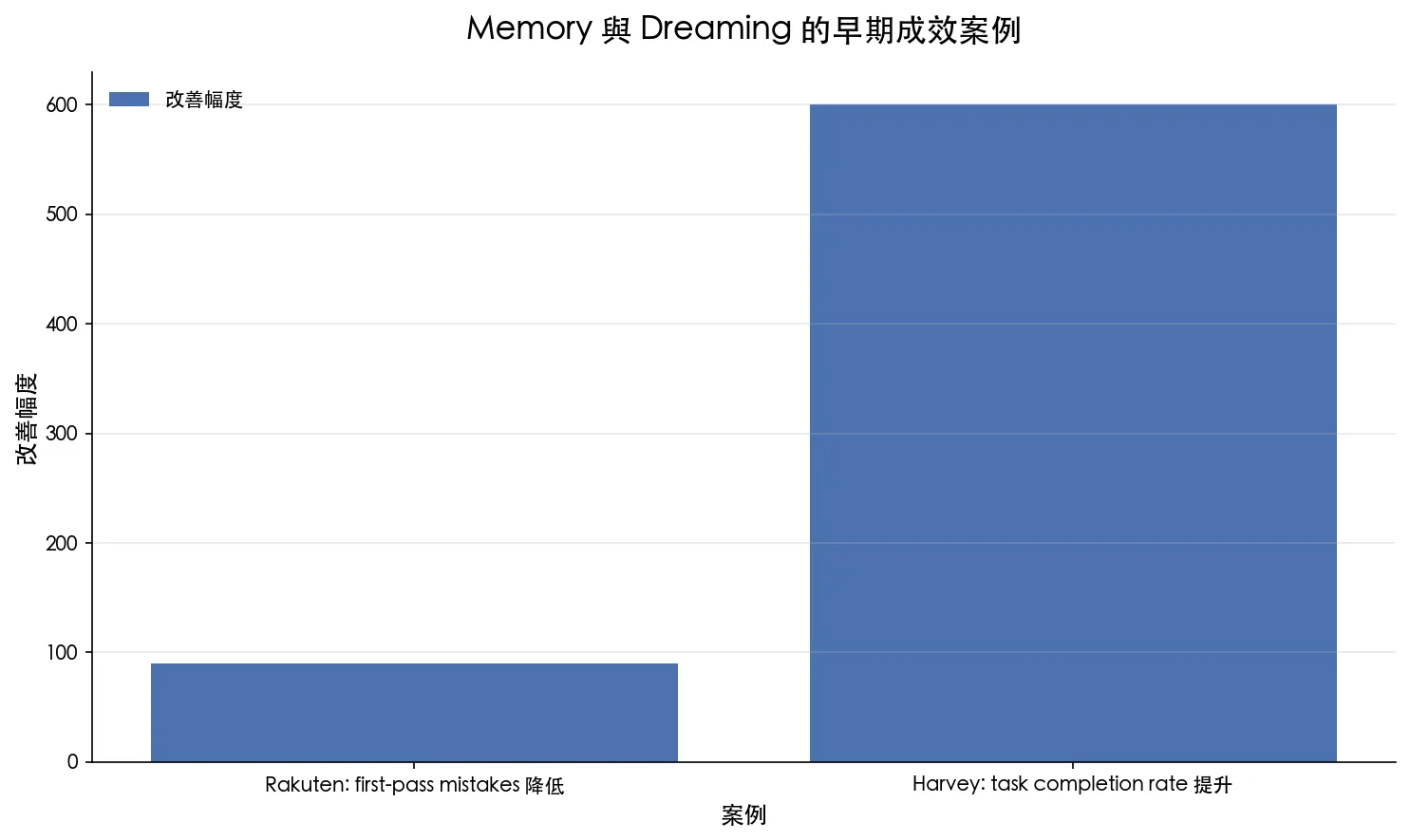
早期案例有兩個數字值得注意。Rakuten 在內部 knowledge agents 裡導入 memory 後,first-pass mistakes 降低 90%。Harvey 在法律場景 benchmark 中導入 dreaming 後,其中一個 scenario 的 task completion rate 提升 6 倍。
圖表只是把兩個早期案例視覺化。它們不是通用保證,但足以說明 memory 與 dreaming 對長任務 agent 的潛力。 這些數字不能直接解讀成所有 agent 系統都會有同樣改善,但方向很明確:memory 先降低重複犯錯,dreaming 再把多個 agent 的經驗整理成更乾淨、更可用的知識庫。對企業來說,這會同時影響正確率、token 效率、延遲和維護成本。
SRE Agent 的例子最容易理解
假設一個 SRE agent 收到 P1 alert,它開始查 CPU utilization、流量模式、最近部署的 PR,最後把調查結果寫進 SRE memory store。幾分鐘後同樣 alert 又出現,另一個 SRE agent 啟動時,第一件事不是從零開始查,而是先讀到前一個 agent 留下的調查結果,直接避開重複工作。
這就是 memory 的即時價值:省 token、省時間、也讓後續 agent 站在前一個 agent 的肩膀上。再往下一層,dreaming 會回看過去 7 天相關 sessions,找出多個 agent 都沒有單獨注意到的模式。例如很多 alert 都剛好在上游 CPU spike 後 60 秒發生,那可能代表 retry logic 或排程邏輯有問題。
這種模式非常適合 自我進化 AI Agent 架構 。但重點不是讓 agent 無限制亂寫記憶,而是要有版本歷史、attribution metadata、審核流程和可回滾能力。
實作時最該注意的三件事
第一,記憶要可審計。誰寫了什麼、什麼時候寫、基於哪個 session 寫,這些資訊必須留下來。否則 memory 一旦被污染,後續 agent 會把錯誤經驗當成事實。
第二,記憶要分層。組織層級 best practices、團隊 runbook、專案知識、個別任務 working memory,不應該全部混在同一個檔案。這和寫 AI 開發紀律 很像:越是長期會被重複使用的規則,越要整理成穩定結構。
第三,dreaming 不應該完全無人監督。它產生 memory diff 後,可以直接套用,也可以先走檢查、PII scanning、人工 review 或外部 pipeline。對企業 production agent 來說,這種控制權比單純「模型會自動學習」更重要。
我的判斷:Memory 會成為 Agent 系統的資料庫層
如果把 MCP 看成工具層,把 Skills 看成能力層,那 memory 很可能會變成 agent 系統的資料庫層。它不只是「記住使用者喜好」這麼簡單,而是把 agent 的工作歷史、錯誤模式、成功策略與環境知識變成可管理、可審計、可演進的資產。
Dreaming 則讓這個資料庫不只是被動儲存,而是能定期整理索引、刪除過期內容、回填驗證結果、把多個 agent 的經驗濃縮成明天可以直接使用的知識。未來真正強的 agent 系統,可能不是單一模型最聰明,而是整個系統能不能把每天做過的事變成明天的能力。
FAQ
AI Agent memory 是什麼?
AI Agent memory 是讓 agent 保留工作經驗、任務策略、環境知識與常見錯誤的記憶系統。它可以幫 agent 在長任務或多 session 工作中避免每次都從零開始。
Dreaming 和一般 memory 有什麼不同?
Memory 偏向任務進行中的即時讀寫;Dreaming 則是離線整理流程,會回看多個 agent sessions,找出共同模式、去重、驗證記憶並回填更好的內容。
Memory 會不會讓 agent 學到錯誤資訊?
會有這個風險,所以 production memory 需要版本歷史、attribution metadata、權限控管、PII scanning、人工 review 或自動檢查流程。記憶不是越多越好,而是要可靠、可追溯、可清理。
什麼情境最適合導入 agent memory?
最適合長任務、多 agent、重複問題多、環境複雜的場景,例如 SRE triage、程式碼維護、企業知識問答、法務研究、客服流程與內部自動化。
by Rain Chu 5 月 25, 2026 | AI , claude , 模型
Claude Code 已經不只是「在終端機裡幫你寫程式的 AI」。根據 Anthropic 官方說明,Claude Code 是一個能理解整個程式碼庫、編輯檔案、執行命令,並協助開發者完成修 Bug、加功能、自動化開發任務的 agentic coding assistant。
而近期 AI 開發社群開始討論一個更進階的概念:Claude Code Workflow
它的核心不是「再寫一段更長的 Prompt」,而是把一整套開發流程變成可以重複執行、可以追蹤、可以驗證、可以復跑的工作流。換句話說,Workflow 讓 AI 編程從「模型臨場建議」進一步走向「工程化編排」。
這對開發者、技術主管、架構師與 AI Agent 使用者來說,是非常重要的一步。
什麼是 Claude Code Workflow?
Claude Code Workflow 可以理解成一種「把 AI Agent 工作流程寫成程式」的方式。
過去我們使用 Claude Code,通常是這樣:
請幫我分析這個 GitHub 專案,找出架構問題,並提出改善建議。
這種方式雖然方便,但有幾個問題:
第一,每次執行結果可能不完全一致。
Workflow 的價值就在這裡:它把流程變成代碼,而不是只靠 Prompt。
一個 Workflow 通常會包含三個核心部分:
export default { meta: { name: "workflow-name", description: "說明這個 workflow 要做什麼" }, async run() { const result = await agent("請執行某個任務"); return result; }} 概念上,一個 Workflow 至少會有:
meta:定義名稱與描述agent():至少呼叫一個 Agent 執行任務return:把結構化結果傳回主流程
這代表 Workflow 不只是「提示詞模板」,而是一個可以持久化、版本化、重複執行的 AI 編排腳本。
為什麼 Workflow 很重要?
Claude Code 官方文件目前已經提供許多常見工作流程,例如探索程式碼、修 Bug、重構、測試、處理 PR、撰寫文件、平行 Session、Plan Mode,以及把 Claude 接進腳本與 CI 批次處理。
但 Workflow 的想像更進一步:它不是只告訴 Claude「請照這些步驟做」,而是把這些步驟寫成可執行邏輯。
這會帶來幾個關鍵改變:
1. 可重複使用
同一個 PR Review Workflow,可以套用到不同 GitHub Repository。
同一個 Deep Research Workflow,可以套用到不同技術主題。
同一個架構評審 Workflow,可以套用到不同系統設計案。
2. 可追蹤
Workflow 可以明確知道:
哪個 Agent 負責分析安全性?
這比單純 Prompt 更接近真正的軟體工程流程。
3. 可驗證
Workflow 可以設計成多階段驗證。
例如:
第一個 Agent 產生答案。
這種方式可以降低 AI 幻覺,特別適合程式碼審查、資安報告、技術研究與商業決策文件。
4. 可復跑
如果 Workflow 是 JS 腳本,它就能像程式碼一樣被 Git 管理。
你可以:
保存版本
這代表 AI Agent 的使用方式,正在從「聊天」變成「工程系統」。
如何開啟 Claude Code Workflow 實驗功能?
以下指令來自社群實測內容,目前不屬於 Anthropic 官方正式文件中明確宣告的穩定功能。因此建議把它視為「實驗性功能」,不要直接用在正式 Production 流程。
macOS / Linux
export CLAUDE_CODE_WORKFLOWS=1 接著啟動 Claude Code CLI:
Windows
SET CLAUDE_CODE_WORKFLOWS=1 接著啟動:
啟動多 Agent Workflow 的範例 Prompt
ultrawork 請為 GitHub 專案 XXX 啟動 multi agent workflow,分析程式碼品質、安全性、架構、測試覆蓋率與可維護性,最後輸出一份結構化 Review 報告。 查看 Workflow
產生或管理 Subagents
Workflow、Subagents、Skills、Agent Teams 有什麼不同?
這是最容易混淆的地方。
Claude Code 官方文件已經明確說明 Subagents、Skills、Agent Teams 的用途。Subagents 是專門處理特定任務的 AI 助手,每個 subagent 有自己的 context window、自訂系統提示、工具權限與獨立權限,適合把支線任務從主對話中分離出去。
Skills 則是透過 SKILL.md 擴充 Claude 的能力,適合把常用指令、檢查清單、多步驟程序變成可重複呼叫的技能。官方文件也提到 Skills 可以在需要時被載入,避免長篇指令一直佔用主要上下文。
Agent Teams 則是多個 Claude Code Session 的協作模式,由一個 lead session 協調工作,其他 teammate 各自在獨立 context window 中工作,並且可以彼此溝通。官方文件也明確指出,Agent Teams 與 Subagents 的差異在於:Subagents 主要回報給主 Agent,而 Agent Teams 的成員可以彼此直接溝通。
下面用簡單方式比較:
類型 核心概念 適合用途 本質 Prompt 臨時指令 單次任務、快速問答 自然語言 Skills 可重複使用的能力包 常用檢查清單、格式化、特定任務 SOP SKILL.md 指令與資源Subagents 專門任務助手 安全審查、測試分析、文件整理 獨立上下文的 AI 助手 Agent Teams 多個 Claude Code Session 協作 大型專案、多模組開發、跨層協作 多 Session 團隊 Workflow 用程式碼編排 Agent 流程 PR Review、研究、驗證、評審、循環改進 腳本化流程
最重要的差異是:
Skills 是讓 Claude 學會一種能力;Subagents 是讓 Claude 派出專門助手;Workflow 則是把整個流程寫成代碼。
Workflow 與 Subagents 的差異
Subagents 比較像「專業分工」。
例如:
一個 security-reviewer subagent 專門看資安問題。
但 Workflow 是「流程編排」。
它可以決定:
先讓 Agent A 分析架構。
所以可以這樣理解:
Subagents 是工作者,Workflow 是工頭加流程圖。
Workflow 與 Skills 的差異
Skills 比較像「可重複使用的操作說明」。
例如:
/code-review/debug/loop/verify
Claude Code 官方文件也提到,Skills 可以透過 SKILL.md 建立,並在相關情境自動載入或手動呼叫。
但 Workflow 更像「可執行的流程腳本」。
Skills 通常重點在「教 Claude 怎麼做」。
所以差異可以簡化成:
Skills 是能力;Workflow 是編排。
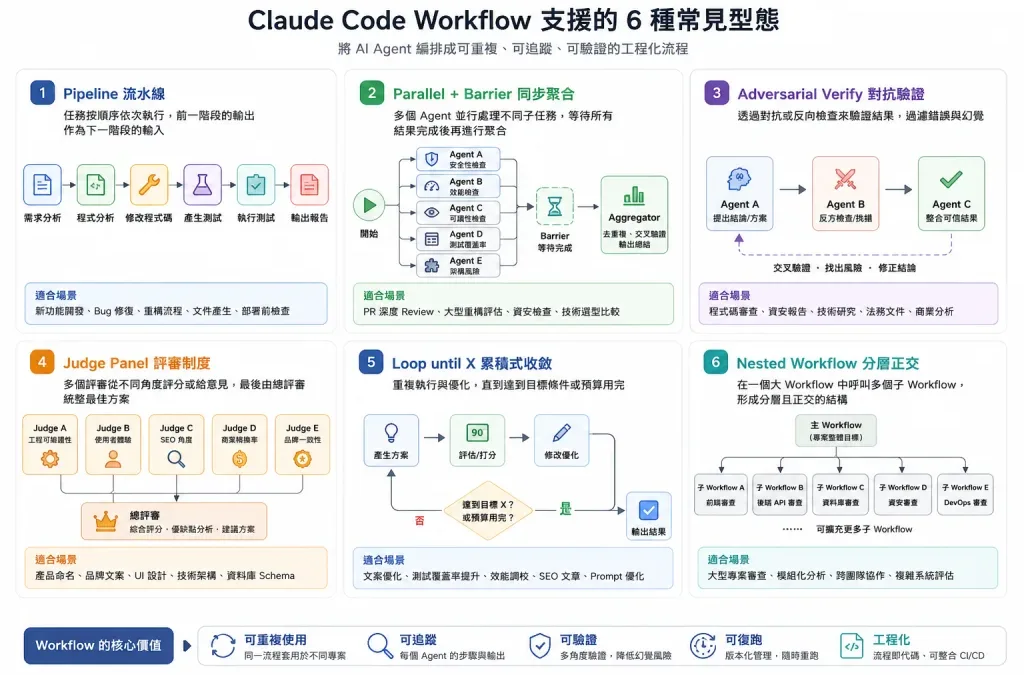
Claude Code Workflow 支援的 6 種常見型態
以下是目前最值得關注的 6 種 Workflow 型態。
Claude Code Workflow 6 types 1. Pipeline 流水線
Pipeline 是最基本的工作流型態。
它的概念是把任務拆成多個階段,前一階段的輸出會成為下一階段的輸入。
例如:
讀取需求 → 分析程式碼 → 修改程式 → 產生測試 → 執行測試 → 輸出報告 適合用在:
新功能開發
範例:
請建立一個 pipeline workflow:1. 分析目前 Repository 架構2. 找出最可能影響效能的模組3. 產生優化建議4. 修改程式碼5. 補上測試6. 回傳修改摘要 2. Parallel + Barrier 同步聚合
這種模式會同時啟動多個 Agent,等所有 Agent 都完成後,再進入下一階段。
它很適合用在需要多角度分析的任務。
例如 PR Review:
Agent A:檢查安全性Agent B:檢查效能Agent C:檢查可讀性Agent D:檢查測試覆蓋率Agent E:檢查架構風險Barrier:等待所有結果完成Aggregator:去重複、交叉驗證、輸出總結 適合用在:
PR 深度 Review
這種模式的重點是「同步聚合」。它不是誰先完成就直接輸出,而是等所有結果回來後再統整。
3. Adversarial Verify 對抗驗證
Adversarial Verify 是用來降低 AI 幻覺的重要模式。
做法是讓一個 Agent 產生答案,另一個 Agent 扮演反方、審查者或攻擊者,專門找錯。
例如:
Agent A:提出架構改善建議Agent B:找出 Agent A 的錯誤、過度假設與風險Agent C:根據 A 與 B 的結果,輸出可信版本 適合用在:
程式碼審查
這種模式的價值在於:不要只相信第一個 AI 回答,而是讓另一個 AI 專門挑戰它。
4. Judge Panel 評審制度
Judge Panel 很適合用在「沒有唯一正確答案」的任務。
例如:
產品命名
你可以設計多個評審:
Judge A:從工程可維護性評分Judge B:從使用者體驗評分Judge C:從 SEO 角度評分Judge D:從商業轉換率評分Judge E:從品牌一致性評分 最後由總評審輸出:
最佳方案
這比單一 Agent 給建議更穩定,也更適合團隊決策。
5. Loop until X 累積式收斂
Loop until X 的概念是:不斷循環改善,直到達到某個條件。
例如:
產生方案 → 評分 → 修改 → 再評分 → 達到 90 分或預算用完 → 輸出 適合用在:
文案優化
這種模式的重點是「預算控制」。
例如你可以設定:
最多跑 5 輪
這讓 AI 工作流不會無限制消耗 token 或時間。
6. Nested Workflow 分層正交
Nested Workflow 是最高階的用法。
它允許一個大 Workflow 裡面再呼叫小 Workflow。
例如:
主 Workflow:完整 SaaS 專案審查子 Workflow A:前端架構審查子 Workflow B:後端 API 審查子 Workflow C:資料庫審查子 Workflow D:資安審查子 Workflow E:DevOps 審查子 Workflow F:成本與可擴展性審查 這種方式非常適合大型專案。
因為大型任務如果全部塞進一個 Prompt,很容易失控。Nested Workflow 則可以把任務切成多個正交模組,每個模組有自己的輸入、輸出與驗證方式。
Claude Code Workflow 的常見使用場景
場景 1:GitHub PR 深度 Review
這是最典型的 Workflow 應用。
你可以讓 Workflow 自動:
分析 PR diff
範例 Prompt:
ultrawork 請針對 GitHub PR XXX 啟動 multi agent workflow,分別從安全性、效能、可維護性、測試覆蓋率與架構一致性進行審查,最後輸出一份可以貼到 PR 的 Review 報告。 場景 2:Deep Research 技術調研
Workflow 非常適合做技術研究。
例如你要研究:
LangGraph vs CrewAI vs Claude Agent SDK
Workflow 可以讓不同 Agent 分別研究:
官方文件
最後再由彙整 Agent 輸出結論。
場景 3:Harness Engineering 技術調研
如果你正在做企業級 AI Agent 平台,Workflow 可以變成一種 Harness Engineering 工具。
它可以負責:
建立研究任務
這讓技術調研不只是「問 AI 一個問題」,而是變成一套可重複執行的工程流程。
場景 4:大型重構前的風險評估
在修改大型系統前,可以先跑一個重構評估 Workflow。
例如:
請建立一個 workflow,分析目前專案是否適合把 monolith 拆成 service,請從資料庫耦合、API 邊界、部署複雜度、測試風險與團隊維護成本評估。 Workflow 可以輸出:
可重構區塊
場景 5:SEO 文章自動產製與審查
Workflow 不只適合寫程式,也可以用在內容產製。
例如:
Agent A:產生 SEO 大綱Agent B:研究搜尋意圖Agent C:撰寫文章Agent D:檢查繁體中文語氣Agent E:產生 meta descriptionAgent F:評估是否符合 E-E-A-T 最後輸出:
WordPress 文章
場景 6:AI 產品功能規格書產生
你可以把 Workflow 用在產品開發初期。
例如:
輸入一個產品想法,Workflow 自動產生:1. PRD2. User Stories3. API 規格4. Database Schema5. 前端頁面列表6. 測試案例7. 開發任務切分 這對 AI SaaS、內部系統、WordPress 外掛、企業工具都很實用。
場景 7:安全性與合規檢查
Workflow 可以設計成安全審查管線。
例如:
Agent A:檢查硬編碼密碼Agent B:檢查 SQL InjectionAgent C:檢查 XSSAgent D:檢查權限控管Agent E:檢查 Docker / CI/CD 設定Agent F:產生修補建議 適合用在:
上線前檢查
場景 8:創意應用:AI 製作人工作流
如果你正在做 AI 音樂、AI 內容或 AI 製作人系統,Workflow 也可以派上用場。
例如一首歌的產製流程可以變成:
Agent A:分析歌曲主題Agent B:產生歌詞方向Agent C:設計 Suno PromptAgent D:檢查曲風一致性Agent E:產生封面圖 PromptAgent F:產生社群貼文Judge Panel:從商業性、情緒、記憶點、品牌一致性評分 這種方式可以把創意流程產品化,不再只是單次生成。
Workflow 的核心價值:把 AI 協作變成工程資產
Claude Code Workflow 真正重要的地方,不是它多了一個指令,也不是它可以叫很多 Agent。
真正的重點是:
Workflow 讓 AI 協作流程本身變成可以保存、維護、優化與版本控制的工程資產。
這跟過去的 Prompt Engineering 很不一樣。
Prompt Engineering 重點是「如何問得更好」。
未來團隊很可能會出現這些檔案:
.github/workflows/ai-pr-review.js.claude/workflows/security-audit.js.claude/workflows/deep-research.js.claude/workflows/refactor-planner.js.claude/workflows/seo-content-pipeline.js 這些 Workflow 會像今天的 CI/CD、Lint、Test、Build Script 一樣,成為開發流程的一部分。
實務導入建議
如果你想開始使用 Claude Code Workflow,可以先從低風險場景開始。
建議順序如下:
第一階段:研究與報告
先用 Workflow 做:
技術調研
這類任務即使輸出有誤,也比較容易人工修正。
第二階段:Review 與驗證
接著導入:
PR Review
這時候建議搭配 Adversarial Verify,讓另一個 Agent 專門挑錯。
第三階段:半自動修改程式碼
最後再導入:
自動修 Bug
但這個階段一定要搭配 Git、測試、人工 Review 與權限控管。
使用 Claude Code Workflow 要注意什麼?
1. 目前仍應視為實驗功能
你提供的 CLAUDE_CODE_WORKFLOWS=1、ultrawork、/workflows 等內容,目前我沒有在 Anthropic 官方穩定文件中確認到完整正式公告。
因此建議文章中不要把它寫成「官方正式發布」,而是描述為:
「影片與社群實測發現的實驗性功能」
2. 不要讓 Workflow 直接碰 Production
Workflow 可以很強,但也代表風險更高。
建議:
只在 Git branch 執行
3. 結構化輸出很重要
Workflow 最好不要只輸出一段文章。
建議輸出:
{ "summary": "", "findings": [], "risks": [], "recommendations": [], "files_changed": [], "tests": [], "confidence": 0.87} 這樣才能被其他工具、CI/CD、Dashboard 或自動化系統接續使用。
4. 成本與 Token 要控管
多 Agent 工作流很容易消耗大量 Token。
尤其是:
Parallel + Barrier
這些模式都可能比單一 Claude Code Session 更昂貴。
所以一定要設定:
最大輪數
Claude Code 下載與官方資源
Claude 官方下載頁目前提供 macOS、Windows、Windows ARM64、iOS、Android,以及 Claude Code 的 Terminal、VS Code、JetBrains、Slack 等環境入口。官方頁面也顯示 Linux 桌面版目前不可用,但 Claude Code Terminal 可透過官方入口安裝。
Claude Code 官方文件也提供 Common workflows、Skills、Subagents、Agent Teams 等開發者文件,可作為學習 Claude Code 工作模式的基礎。
Workflow 是 Claude Code 繼 MCP、Skills、Subagents 之後的重要演進
Claude Code Workflow 的概念,代表 AI 編程正在進入下一個階段。
第一階段是聊天式 AI:你問,它答。
如果說 Prompt 是個人技巧,Workflow 就是團隊工程資產。
未來 GitHub 上很可能會出現大量開源 Claude Code Workflow,例如:
PR Review Workflow
對開發者來說,這不只是多一個 Claude Code 小技巧,而是 AI Agent 工程化的重要方向。
Claude Code Workflow 的關鍵價值可以濃縮成一句話:
把 AI 編程從「一次性的對話」升級成「可重複、可追蹤、可驗證、可復跑的工程流程」。
這也是 AI 編程真正走向團隊化、標準化與產品化的開始。





近期留言